How Advanced Manufacturing Technology Improves WPC Performance
Why Manufacturing Technology Matters
Wood Plastic Composite (WPC) materials have become an increasingly popular alternative to traditional wood for outdoor construction and landscaping. While raw materials are important, advanced manufacturing technology plays a critical role in determining product quality, durability, and long-term performance.
Modern production processes improve the compatibility between natural plant fibers and polymer materials, resulting in stronger, more stable composite products that can withstand demanding outdoor environments.
The Challenge of Combining Natural Fibers and Plastics
Natural fibers such as wood flour, bamboo fibers, or agricultural straw contain moisture and have different surface characteristics from plastic polymers.
Without proper processing, poor bonding between these materials can lead to:
- Reduced mechanical strength
- Surface cracking
- Moisture penetration
- Dimensional instability
- Shorter service life
To overcome these challenges, manufacturers use advanced interface modification technologies and optimized formulations to improve the bonding between fibers and plastics.

How Modern Manufacturing Technology Improves WPC
Today's high-quality WPC products benefit from several technological improvements.
Better Material Compatibility
Special additives and coupling agents improve adhesion between natural fibers and polymer materials, creating a stronger composite structure.
Enhanced Mechanical Strength
Improved bonding increases impact resistance, bending strength, and structural stability.
Improved Weather Resistance
Optimized formulations help reduce moisture absorption while improving resistance to UV radiation, mold, and weathering.
Greater Dimensional Stability
Advanced processing minimizes expansion, contraction, and deformation caused by changing temperatures and humidity.
Sustainable Use of Agricultural Resources
Modern composite technology also makes better use of renewable resources.
In addition to wood fibers, agricultural residues such as straw can be incorporated into composite materials, helping to:
- Reduce agricultural waste
- Minimize open-field straw burning
- Lower dependence on natural timber
- Support sustainable resource utilization
These innovations contribute to environmentally responsible manufacturing and circular economy initiatives.
Applications of Advanced WPC Materials
Thanks to continuous improvements in manufacturing technology, modern WPC products are widely used in:
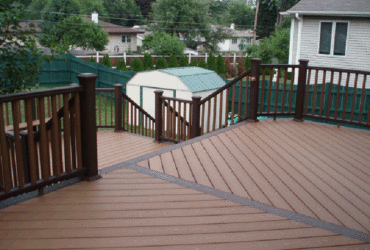
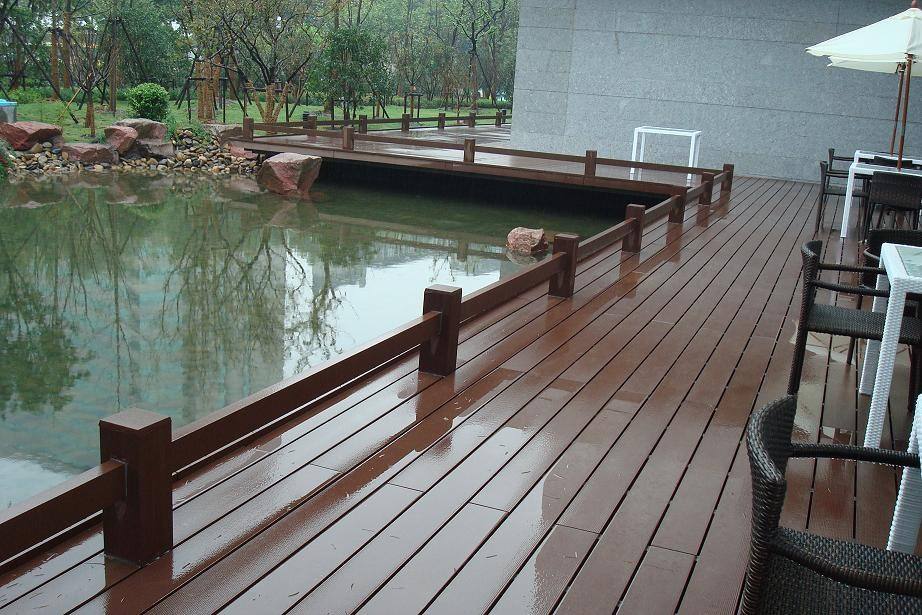
- Outdoor decking
- Fencing systems
- Wall cladding
- Pergolas
- Landscape projects
- Public parks
- Commercial outdoor spaces
Their combination of durability, low maintenance, and natural appearance makes them suitable for a wide range of residential and commercial applications.
Frequently Asked Questions
Why is manufacturing technology important for WPC products?
Manufacturing technology determines how well natural fibers and plastics bond together, directly affecting strength, durability, and long-term performance.
Does better manufacturing technology improve WPC lifespan?
Yes. Improved production processes help increase weather resistance, structural stability, and overall service life.
Are agricultural fibers environmentally friendly?
Yes. Using renewable plant fibers and agricultural residues helps reduce waste while supporting sustainable manufacturing.
Conclusion
The performance of WPC products depends not only on raw materials but also on advanced manufacturing technology.
By improving the compatibility between natural fibers and polymers, modern production techniques enhance strength, durability, weather resistance, and sustainability. As demand for eco-friendly building materials continues to grow, advanced WPC manufacturing technologies will play an increasingly important role in delivering reliable, long-lasting solutions for construction and landscaping projects.
Looking for High-Quality WPC Products?
At Seven Trust, we focus on combining quality raw materials with advanced manufacturing processes to deliver durable WPC decking, fencing, wall cladding, and outdoor solutions for global projects.
Contact us to learn more about our products and technical capabilities.
Relatest Post

WPC in Saudi Arabia: The Smart Choice for Sustainable, Durable Outdoor Solutions
Details icon
Plastic Wood Composite Material Thermal Insulation Outer Wall
Details icon
Research on Decorative Properties of Wood-plastic Composite Decking
Details icon